


Introduction
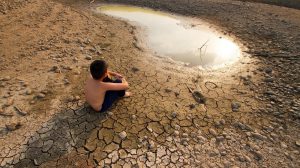
Water is the lifeblood of Pakistan’s economy, agriculture, and society. From the snow-covered peaks of the Himalayas and the Karakoram range to the arid plains of Sindh and Balochistan, Pakistan’s survival hinges on a single river system—the mighty Indus River. However, this river and its tributaries are under increasing stress due to climate change, rapid population growth, inefficient water management, and transboundary tensions. With Pakistan already classified as a “water-stressed” country, projections indicate that it could become “water-scarce” by 2025 if urgent measures are not taken.
In this article, we will explore the growing water crisis in the Indus Basin, how climate change exacerbates it, the implications for food and energy security, and the necessary policy shifts required to avert a national catastrophe.
1. The Indus River System: Pakistan’s Lifeline
Pakistan’s water supply is overwhelmingly dependent on the Indus River System, which accounts for more than 90% of the country’s freshwater. The system includes the Indus, Jhelum, Chenab, Ravi, and Sutlej rivers. Originating from the Himalayas and glacial sources in Indian-administered Kashmir and Tibet, these rivers support the world’s largest contiguous irrigation system, known as the Indus Basin Irrigation System (IBIS).
This irrigation system feeds the breadbasket provinces of Punjab and Sindh, enabling Pakistan to cultivate essential crops like wheat, rice, and cotton. Moreover, hydroelectric projects on the Indus, such as the Tarbela and Mangla dams, provide nearly one-third of the country’s electricity.
2. How Climate Change is Disrupting the Indus Basin
a. Melting Glaciers and Changing River Flows
Pakistan’s glaciers are retreating rapidly due to rising temperatures. In the short term, this may result in increased river flow, but in the long term, the reduction in glacial mass will cause sharp declines in river water availability, especially in the dry months when water is needed most for agriculture.
b. Irregular Monsoons and Rainfall Patterns
Climate change has also altered the monsoon season, making it shorter but more intense. Erratic rainfall causes flooding in some regions and drought in others, disrupting the delicate balance of water distribution across the country.
c. Increased Frequency of Droughts and Floods
Pakistan has seen a rise in both droughts and floods in recent years. The devastating 2022 floods, caused by unprecedented monsoon rains, submerged one-third of the country, while regions like Tharparkar continue to face prolonged droughts. These extremes are becoming more common and are clear symptoms of climate volatility.
3. Alarming Statistics: The Scale of the Crisis
-
According to the Pakistan Council of Research in Water Resources (PCRWR), Pakistan will run dry by 2025 if no corrective actions are taken.
-
Per capita water availability has dropped from 5,600 cubic meters in 1947 to below 1,000 cubic meters in 2023, the threshold for water scarcity.
-
Over 70% of Pakistan’s population depends directly on agriculture, which consumes more than 90% of freshwater resources.
4. Water Management Challenges
a. Inefficient Irrigation Practices
Flood irrigation—where water is allowed to flow freely through fields—is still widely used in Pakistan. This method wastes vast quantities of water, as most of it is lost to evaporation or seepage.
b. Outdated Infrastructure
Canals, dams, and pipelines are poorly maintained, with leakage and seepage losses estimated at 30-40%. The lack of new reservoirs to store water during peak flows also leads to wastage.
c. Urbanization and Industrial Waste
In major cities, potable water is wasted on car washing, gardening, and industrial cooling. Meanwhile, untreated industrial waste and sewage contaminate rivers, reducing the availability of clean water.
d. Population Explosion
With a population of over 240 million and growing, water demand is skyrocketing while supply continues to decline. Urban centers are expanding without sustainable water supply plans, adding pressure to rural-urban water transfers.
5. Transboundary Water Politics: The Indus Waters Treaty Under Strain
The Indus Waters Treaty (1960), brokered by the World Bank between India and Pakistan, divides the six rivers of the Indus Basin between the two nations. Pakistan has rights over the western rivers (Indus, Jhelum, Chenab), while India controls the eastern ones (Ravi, Beas, Sutlej).
However, India’s construction of dams and hydroelectric projects on the western rivers—such as Kishanganga and Baglihar—has raised alarms in Pakistan. Although India claims these projects comply with the treaty, Pakistan views them as a violation and a threat to its water security.
Climate change adds another layer of uncertainty to this tense arrangement, as reduced river flow or sudden release of water upstream could have devastating effects downstream in Pakistan.
6. Sectoral Impacts of Water Scarcity
a. Agriculture and Food Security
Pakistan’s economy is heavily agriculture-based, contributing around 20% of GDP and employing over 40% of the workforce. Water scarcity directly translates into lower crop yields, reduced income for farmers, and higher food prices.
Crops like sugarcane, rice, and cotton are water-intensive, and continued reliance on them may not be sustainable in a water-scarce future.
b. Energy and Hydropower
Reduced river flow due to glacial retreat and erratic rainfall affects hydropower generation, leading to power shortages, load-shedding, and increased reliance on fossil fuels—thus creating a feedback loop that worsens climate change.
c. Public Health
Contaminated water, combined with limited access to clean drinking supplies, contributes to waterborne diseases such as cholera, dysentery, and hepatitis. Children and elderly populations are particularly vulnerable.
d. Social Unrest and Migration
Water scarcity can lead to inter-provincial conflicts, such as those seen between Punjab and Sindh over the distribution of Indus water. In rural areas, declining water availability may force people to migrate to cities, fueling urban slums and increasing unemployment.
7. What Is Being Done: Government and Policy Response
a. National Water Policy (2018)
Pakistan’s first-ever National Water Policy, introduced in 2018, aims to:
-
Improve irrigation efficiency
-
Promote water conservation and pricing
-
Develop additional storage facilities
-
Enhance transboundary water diplomacy
While the policy is a step in the right direction, implementation remains weak, and inter-agency coordination is lacking.
b. Construction of New Dams
Projects such as Diamer-Bhasha Dam, Mohmand Dam, and Dasu Dam are underway to increase storage capacity and hydropower production. However, environmental and displacement concerns have slowed progress.
c. Water Pricing and Metering
There have been discussions about introducing water pricing to curb waste, especially in urban areas. However, political sensitivity and public resistance make this a difficult policy to enforce.
d. Public Awareness Campaigns
NGOs, media outlets, and academic institutions have launched awareness campaigns urging citizens to conserve water, adopt efficient technologies, and report water theft.
8. Solutions and Recommendations
a. Adopt Climate-Smart Agriculture
Introduce drought-resistant crop varieties, drip irrigation, and laser land leveling to optimize water use in agriculture. Encourage farmers to shift from water-intensive crops to more sustainable alternatives.
b. Rainwater Harvesting and Groundwater Recharge
Urban centers should be required to implement rainwater harvesting systems in buildings. At the same time, measures must be taken to replenish groundwater through percolation ponds and recharge wells.
c. Enforce Industrial Regulation
Stringent laws must be passed to ensure industrial effluents are treated before being discharged into rivers and canals. Industries that pollute water bodies should face heavy penalties.
d. Promote Regional Water Cooperation
Strengthening mechanisms under the Indus Waters Treaty, increasing data sharing, and engaging in joint water management with India, China, and Afghanistan are essential for long-term regional peace and sustainability.
e. Invest in Technology and Data Monitoring
Real-time water flow monitoring, remote sensing, and Geographic Information Systems (GIS) can help policymakers and farmers make informed decisions.
Conclusion
Pakistan is at the edge of a water emergency, with climate change accelerating the crisis. The Indus River, once a symbol of life and prosperity, now faces an uncertain future. If urgent actions are not taken to address mismanagement, inefficiency, and climate vulnerability, the consequences will be dire—not just for Pakistan’s environment but also its economy, food supply, and political stability.
Water is no longer a free, infinite resource. It must be treated as a national security issue, with cross-sector collaboration, scientific innovation, and community participation at the heart of any strategy. Only then can Pakistan hope to avoid a water disaster and secure a sustainable future for the generations to come.